March 31, 2026
Empowering productivity: how the HEIDENHAIN Family of Brands is advancing motor technology
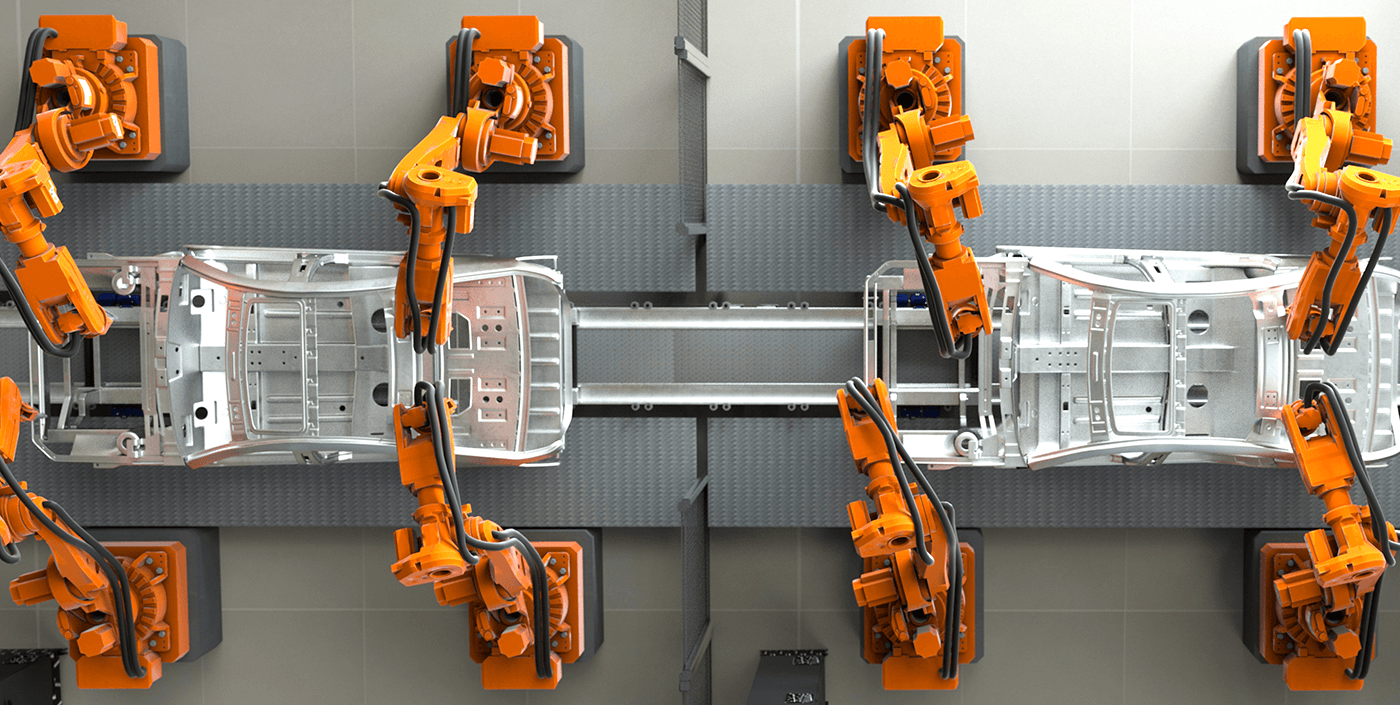
Motors sit at the heart of modern automation. They drive industrial robots, precision manufacturing equipment, move materials through production lines, and enable the positioning systems that make these advanced technologies possible. For decades, improvements in motor performance were largely measured in familiar terms: more torque, greater efficiency, faster dynamic response. Those metrics still matter, but they no longer tell the full story of how motors perform in modern automation systems.
Motors now operate within highly connected production settings where accuracy, reliability, and system intelligence are just as critical as raw mechanical performance. Robotics must adapt to changing loads on the fly. Heavy-duty drives are expected to run continuously regardless of the environment. Linear stages are required to position with micrometer precision.
Meeting these expectations depends not only on the motor itself, but also on the quality of the feedback systems that guide and monitor its motion.
Across servo, BLDC/stepper, asynchronous, and linear motor markets, the HEIDENHAIN family of brands provides a unified measurement ecosystem created to support this evolution. Rather than offering isolated components, the family of brands contributes technologies that strengthen motor performance from multiple angles: accuracy, predictive maintenance insights, thermal resilience, safety, and digital connectivity.
Understanding this broader role begins with servo systems, where the connection between measurement and motion is most immediately visible.
Refining accuracy at the point of action
 In servo-driven robotics and advanced automation, accuracy is frequently evaluated at the tool center point — the location where motion ultimately performs useful work. However, measuring only at the motor shaft does not account for mechanical influences between the motor and the output. Torsional effects, load variations, and compliance within the drivetrain can slightly modify positioning. By measuring closer to the output, manufacturers gain a clearer understanding of the system’s true behavior.
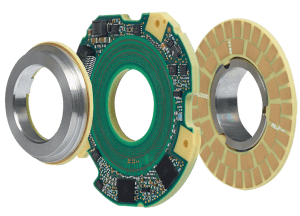
The KCI 120 Dplus was developed with this philosophy in mind. It integrates dual-position measurement into a compact design, enabling precise feedback at both the motor and output levels. This approach can significantly improve Tool Center Point accuracy — in some applications by as much as 8 times — allowing robotic systems to dynamically compensate for load changes and positional deviations.
Its inductive scanning technology provides inherent resistance to contamination and magnetic interference, while the rigid mechanical design supports high vibration loads. Functional safety capabilities and the ability to detect collision-related anomalies without separate torque sensors further strengthen system robustness.
In effect, output measurement transforms the encoder from a passive feedback element into an active contributor to motion control quality.
As accuracy improves, another question naturally follows: how can systems reliably maintain that performance over time?
From measurement to insight: condition monitoring at the source
 In many automation environments, unplanned downtime is costly. Bearings wear. Imbalances develop. Heat builds gradually. These changes rarely occur without warning, yet traditional maintenance strategies often rely on fixed service intervals rather than actual operating conditions.
Integrating condition monitoring directly into the feedback system provides an informed alternative.
The ECI 1323 Splus and EQI 1335 Splus combine position measurement with embedded vibration analysis. A built-in three-axis accelerometer and onboard microprocessors evaluate vibration at the motor shaft — the location where mechanical changes relevant to motor health are detectable.
The vibration data collected by these encoders is transmitted through EnDat 3, HEIDENHAIN’s digital interface for position encoders and drive systems. EnDat provides fast, reliable communication between the encoder and the control system, carrying not only precise position feedback but also additional information such as sensor data, diagnostics, and operating parameters. This ability to move multiple streams of information through a single interface makes the encoder more than a measurement device. It becomes a source of operational insight.
By using the same interface for both motion feedback and diagnostic information, the system lowers the need for additional sensors and cabling while supporting deeper analysis such as order evaluation, frequency monitoring, and early detection of deviations that may indicate bearing wear, imbalance, or contamination.
Instead of reacting to failures after they occur, maintenance teams can anticipate them. Service intervals can be planned more effectively, production schedules become more predictable, and equipment life can be optimized through better insight into operating conditions.
As motor systems become more intelligent, another design constraint comes into sharper focus: thermal limitations.
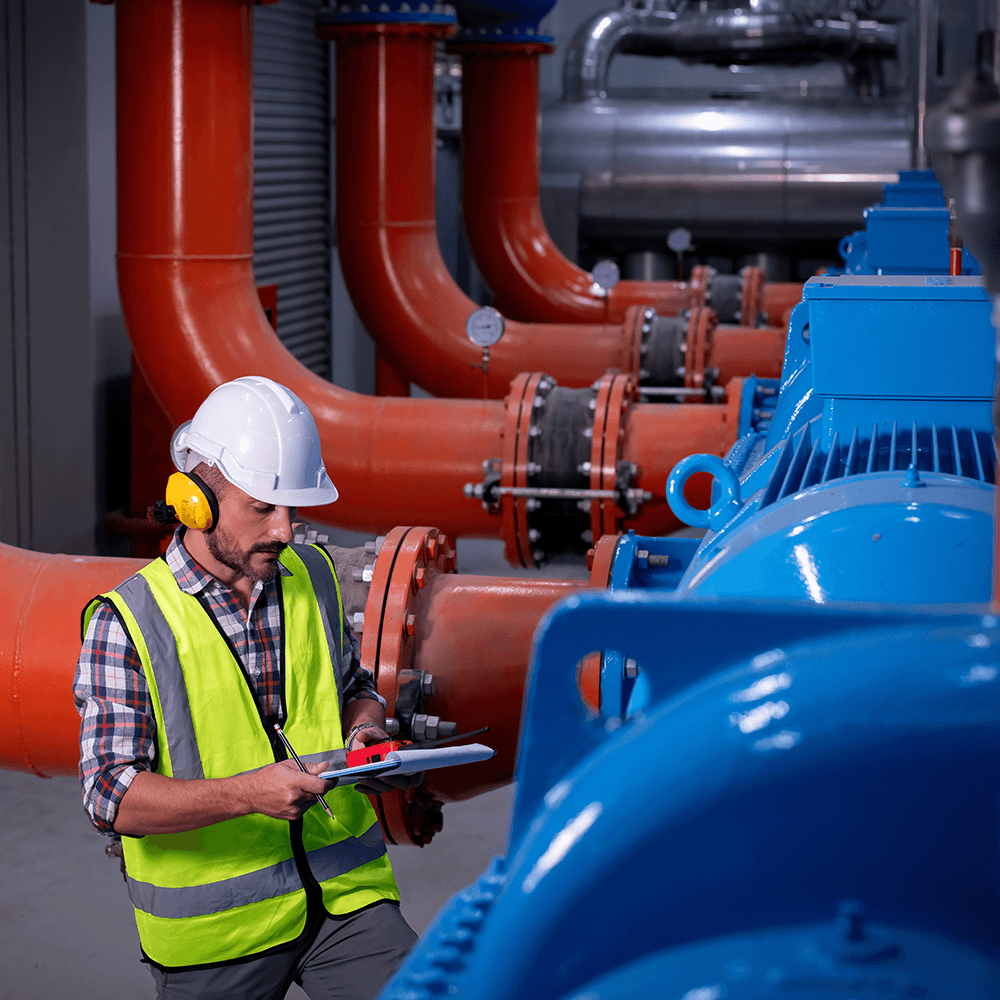
Enabling motors to perform at their full capability
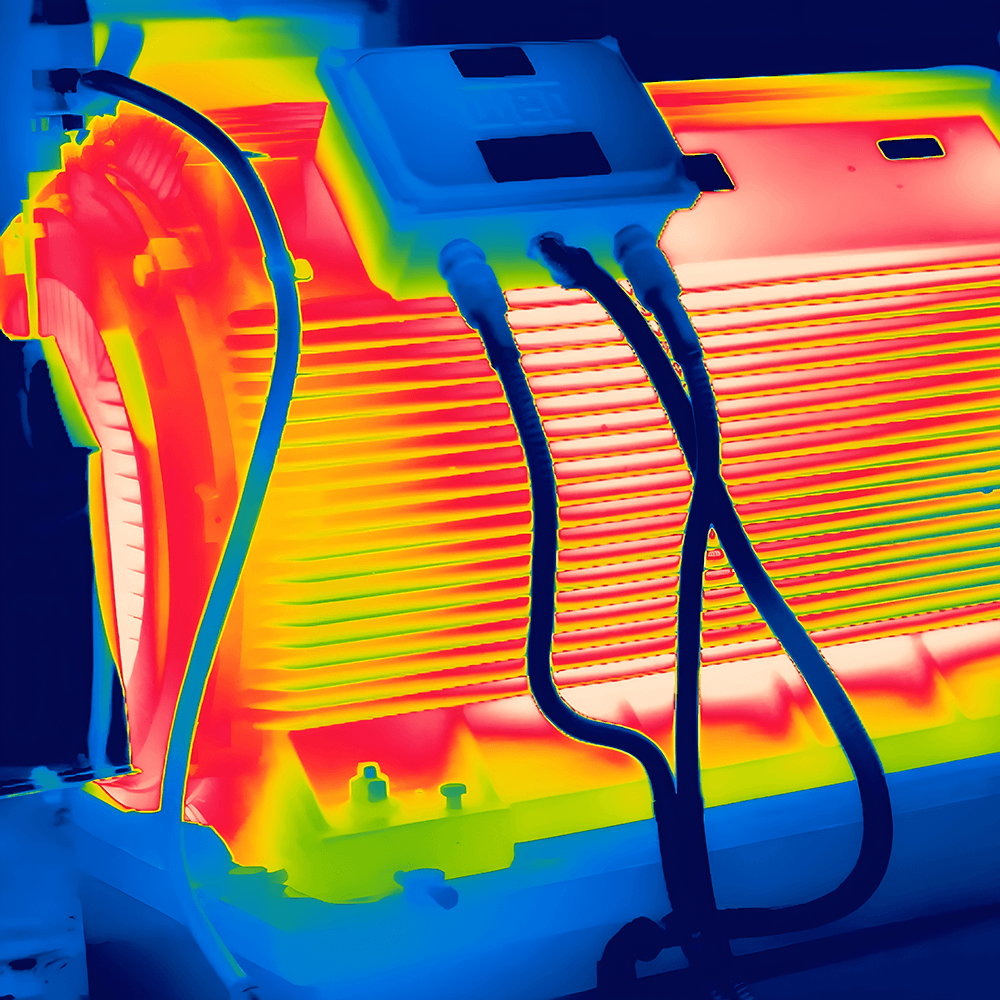
 Motor ratings reflect not only electromagnetic limits, but also thermal constraints imposed by neighboring components. In certain designs, encoders positioned near heat sources can become limiting factors, requiring manufacturers to reduce rated speed or torque to protect system integrity.
Advances in encoder construction are helping to change that equation.
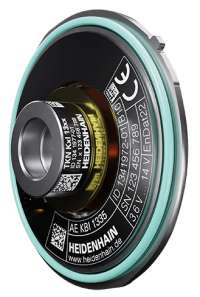
The KCI 1318 FOT and KBI 1335 FOT incorporate fan-out technology that mounts electronic components directly onto a metal carrier. This design improves heat dissipation and allows the encoder to serve as part of the thermal management strategy rather than a vulnerability within it.
By supporting higher permissible operating temperatures, these solutions enable motors to operate closer to their intended performance envelope. At the same time, the integrated bearing-cover concept reduces space requirements and component count, resulting in more streamlined motor architectures overall.
As servo systems continue to evolve, integration efficiency becomes increasingly important. Common mounting platforms across performance classes, such as those offered within the ECI/EQI family, allow motor manufacturers to scale designs without reengineering mechanical interfaces, cutting development time while continuing reliable performance.
These capabilities are further supported by EnDat 3, which extends the communication architecture with features such as hybrid cable transmission, higher data bandwidth, flexible data structures, sensor integration, and functional safety communication based on the black-channel principle. Together, these capabilities enable both current motion-control systems and the connected environments of present-day manufacturing.
While servo systems regularly draw attention for their dynamic precision, other motor categories present different, yet equally demanding, requirements.
Compact precision for BLDC and stepper systems
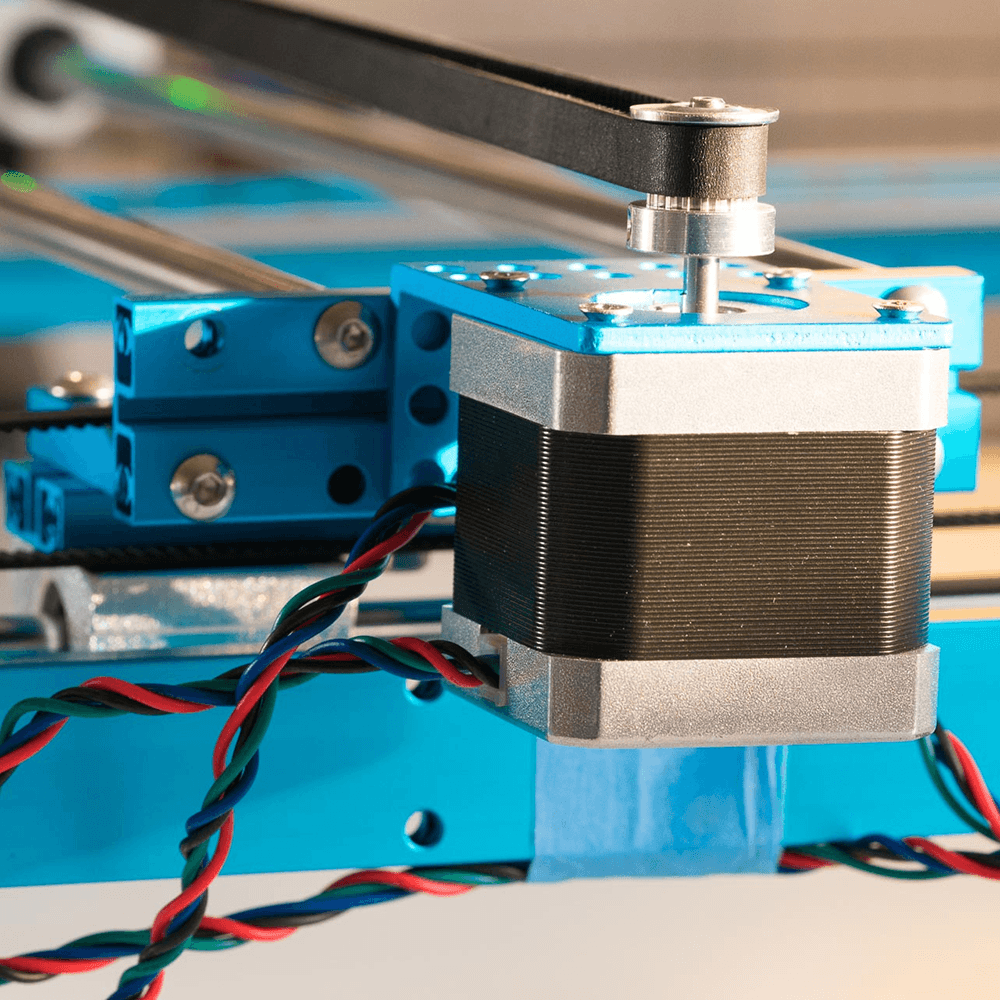
 Closed-loop stepper and BLDC applications frequently operate within space-constrained designs where installation simplicity and reliability are essential.
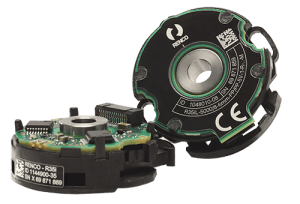
The R35i and R35iL from RENCO provide high-resolution optical feedback in an exceptionally compact format. With resolutions of up to 40,000 measuring steps per revolution and installation heights as low as 8.6 mm, they support precise rotor position measurement without significantly altering motor geometry.
The self-centering slide-lock mechanism simplifies mounting, while integrated diagnostic functions improve reliability. Commissioning and verification are further supported by the HEIDENHAIN PWT 101, which allows functional testing and adjustment directly at the encoder.
These solutions show that precision and integration simplicity can coexist even in compact motor designs.
In contrast, some motor environments demand not compactness, but resilience.
Reliability in demanding industrial conditions
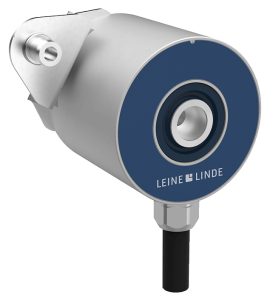
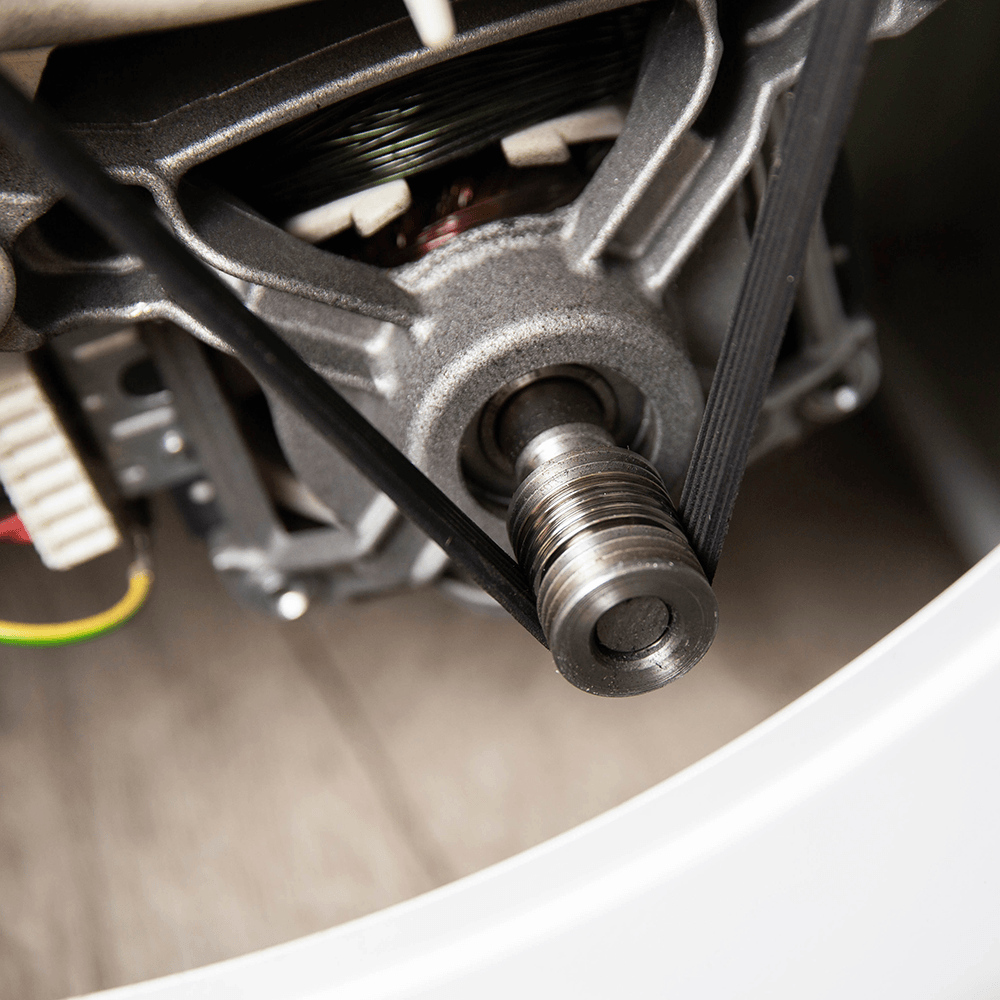
Asynchronous motors used in demanding industrial conditions must operate reliably despite vibration, contamination, humidity, and electrical interference. Under these circumstances, durability becomes a fundamental need for long-term system performance.
The M500 series from Leine Linde utilizes inductive scanning technology to deliver accurate feedback while resisting dirt, shock, and magnetic fields. Extended bearing life, compliance with international safety standards, and strong mechanical construction make these encoders well suited for demanding industrial applications.
For operations focused on uptime, ADS Uptime adds another dimension. Wireless Bluetooth® service access, full lifecycle data tracking, configurable alarm thresholds, and OPC UA integration through ADS Link allow predictive maintenance strategies even in harsh environments. Historical trend data provides insight into long-term operating conditions, supporting preventative decision-making and limiting unplanned shutdowns.
In these applications, the encoder operates as both a measurement device and a monitoring instrument, reinforcing system stability when interruptions are costly.
A cohesive approach to linear motion
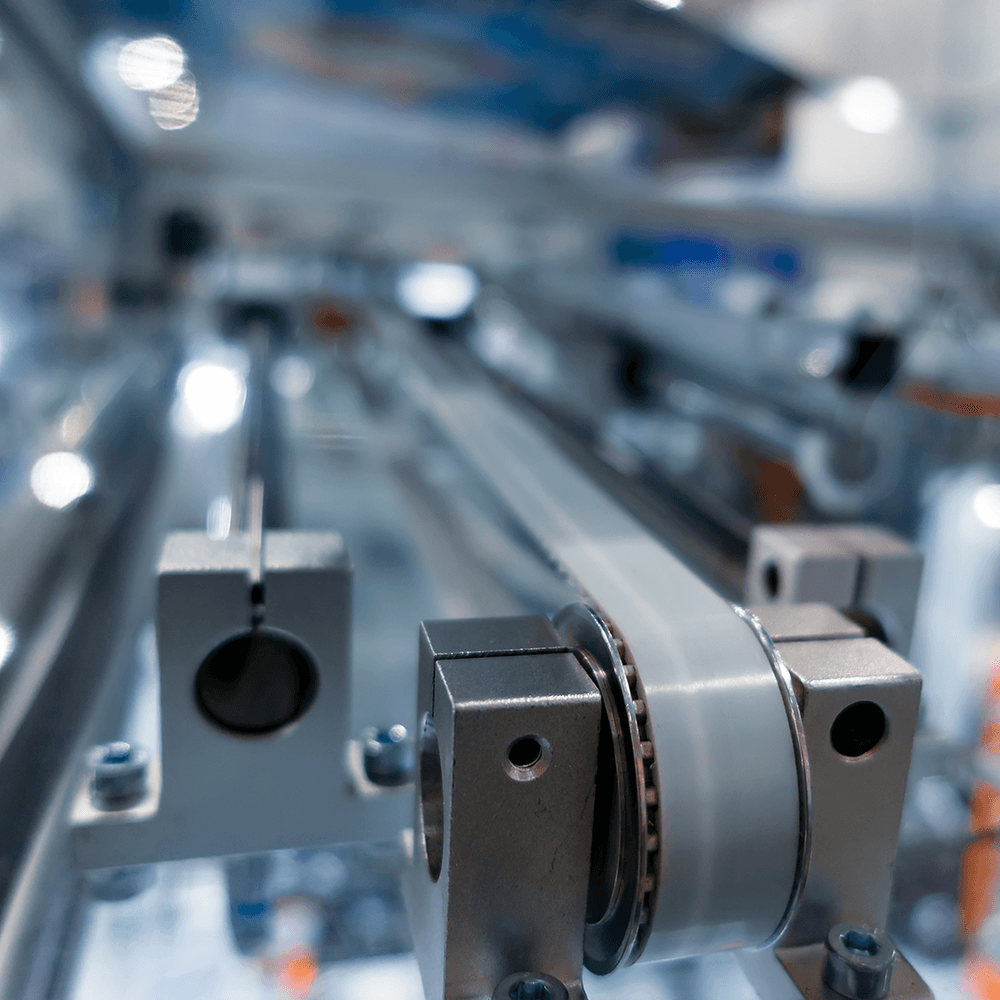
Linear motor systems, often used in precision automation and metrology equipment, introduce a further level of complexity. Accuracy requirements may extend into the nanometer range, while environmental conditions and mechanical restrictions vary widely.
The HEIDENHAIN family of brands brings together complementary technologies to meet a wide range of application needs. RSF Elektronik provides high-precision incremental linear encoders that form the foundation for advanced automation systems. AMO contributes its AMOSIN® inductive sensing technology, which combines near optical-level accuracy with robustness that surpasses magnetic encoders for demanding motion-control environments. For applications where space and precision are critical, NUMERIK JENA offers compact length gauges and optical encoders designed for small installation spaces and high-accuracy measurement tasks.
Together, these solutions provide motor and stage manufacturers with a cohesive selection of feedback technologies tailored to application-specific requirements — from compact systems to high-accuracy metrology platforms.
The expanding role of measurement in modern motors
Across all motor categories, one trend is becoming increasingly clear: motor performance is no longer determined solely by mechanical output, but by the quality of information available about that motion.
Precise measurement at the point of action, insight into mechanical health and operating conditions, thermal resilience that preserves rated performance, functional safety integrated directly into feedback systems, and digital communication designed for connected manufacturing are all becoming essential elements of modern motion systems.
By bringing these capabilities together across a broad portfolio of technologies, the HEIDENHAIN family of brands supports motor OEMs and integrators in building systems that are not only powerful but also intelligent, reliable, and prepared for the requirements of contemporary automation.
As motor technologies continue to evolve, the role of measurement will become increasingly important. For manufacturers designing the next generation of servo systems, closed-loop stepper platforms, heavy-duty drives, or precision linear axes, success will depend not only on how effectively motors move, but on how well that motion is understood, monitored, and controlled.
In state-of-the-art automation, measurement technology has become more than just a component of motion systems. It is a driving force behind their progress.